

Why Warm Blue Doesn’t Exist: One of The Most Misunderstood Colors in Color Analysis
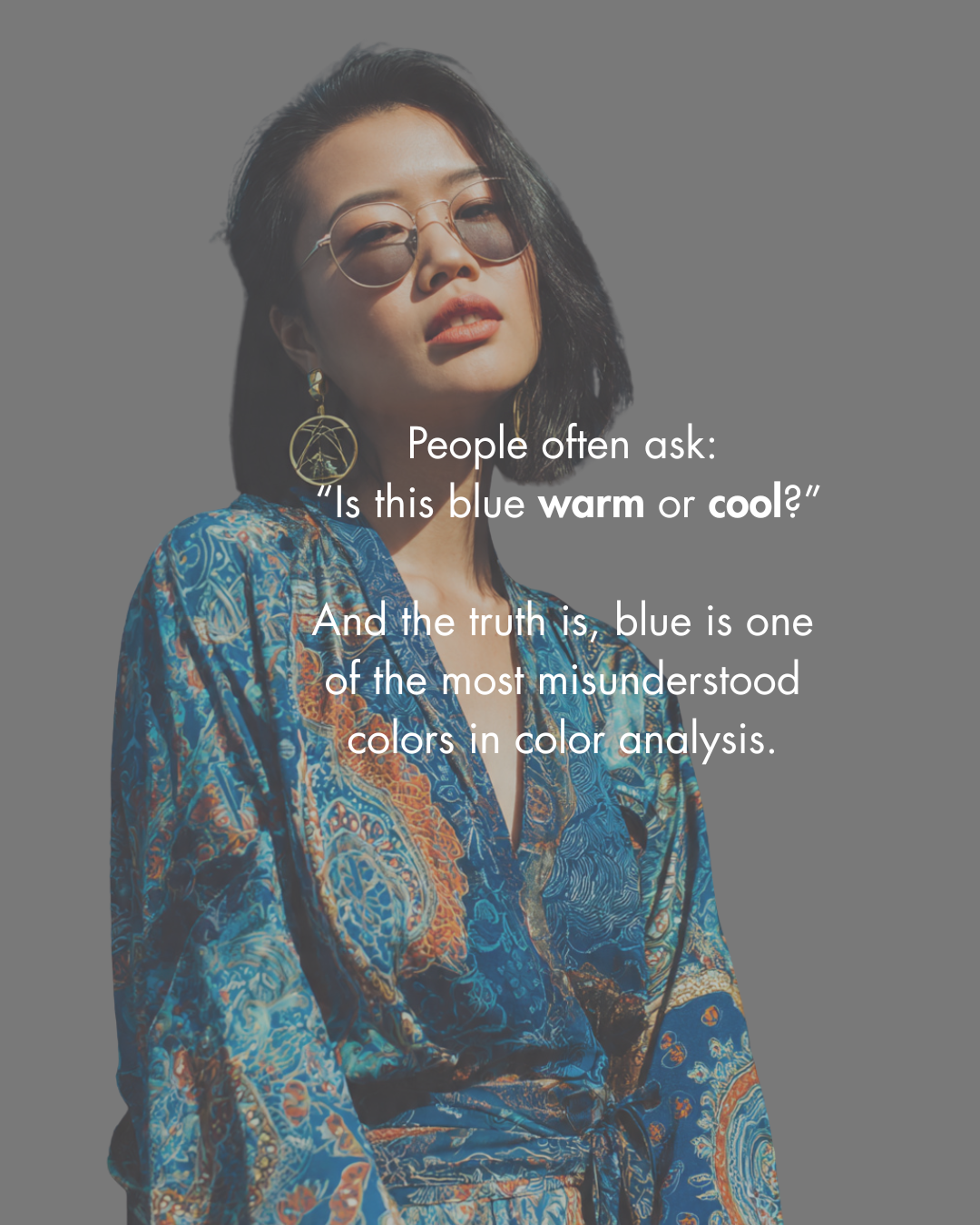
Let’s clear it up.
In the color system I use, every single color is created from the three primaries: red, yellow, and blue. Each one plays a role:
Yellow brings warmth.
Blue brings coolness.
Red? It’s a swing vote—it can shift a color warmer or cooler depending on what it’s mixed with (read more about red here).
So what about blue?
Blue is a cool primary by definition. That means every blue starts on the COOL side of the spectrum.
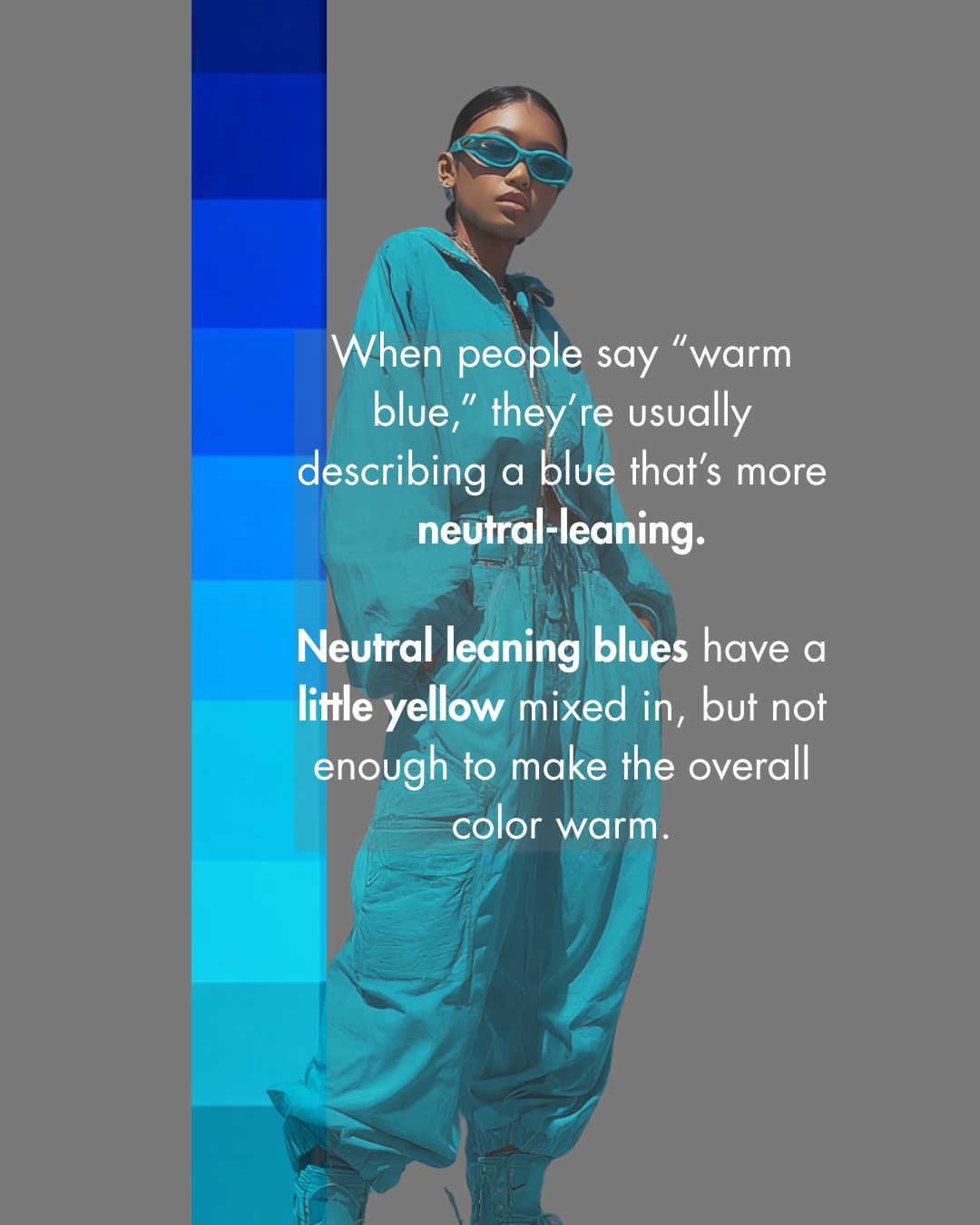
Here’s where it gets tricky: people often look at a blue and say, “That looks like a warm blue.” What they’re usually seeing is a blue that’s leaning neutral—a blue with a touch of yellow in it.
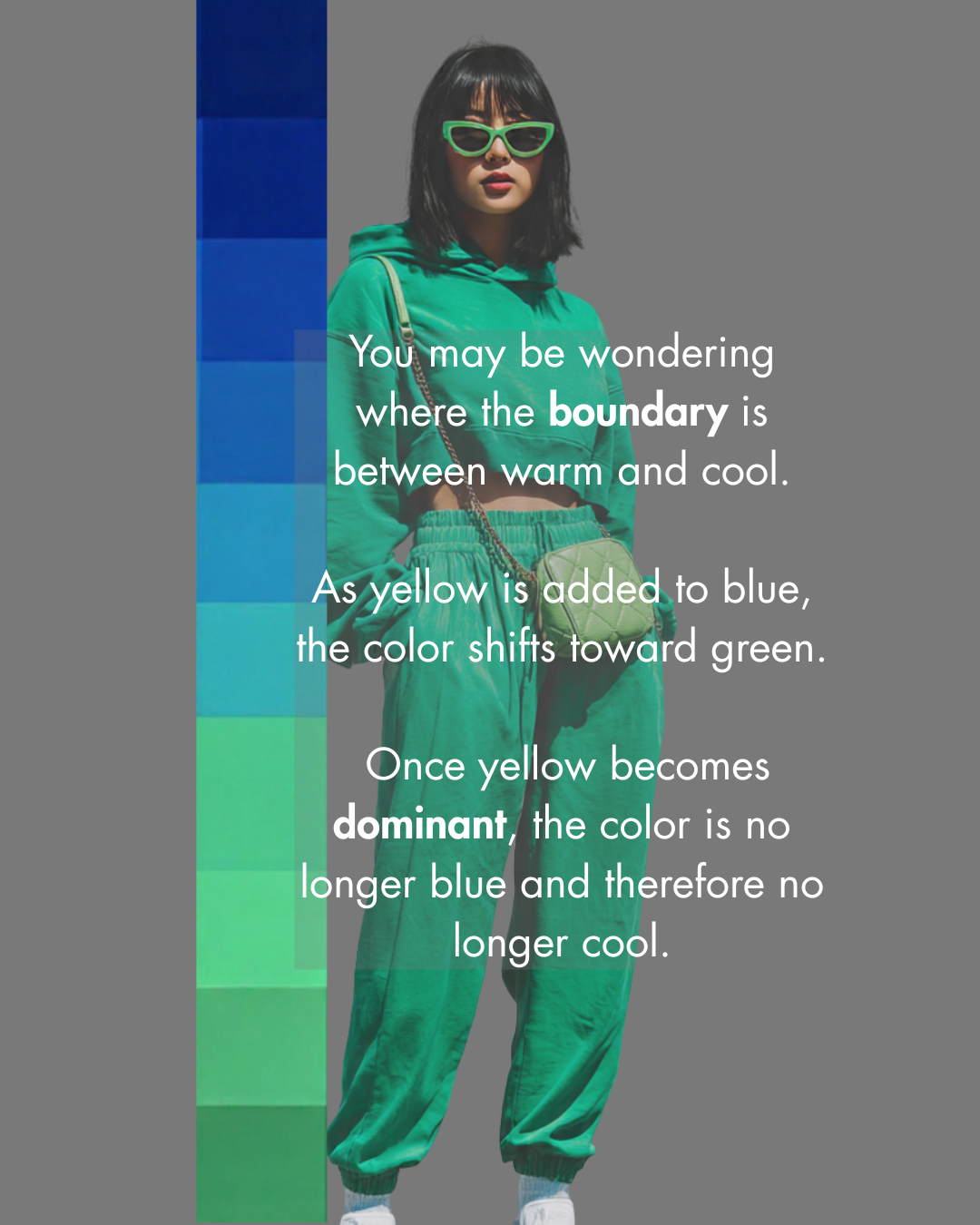
But the second yellow becomes dominant? That blue shifts toward green. And once it shifts toward green, it’s no longer a true blue—and no longer cool.
So, to be crystal clear:
There are cooler blues and less-cool blues.
But there is no such thing as a warm blue.
Some blues have more clarity. Some are dustier or deeper. Some are light, some are muted, some are more neutral. But none of them are warm.
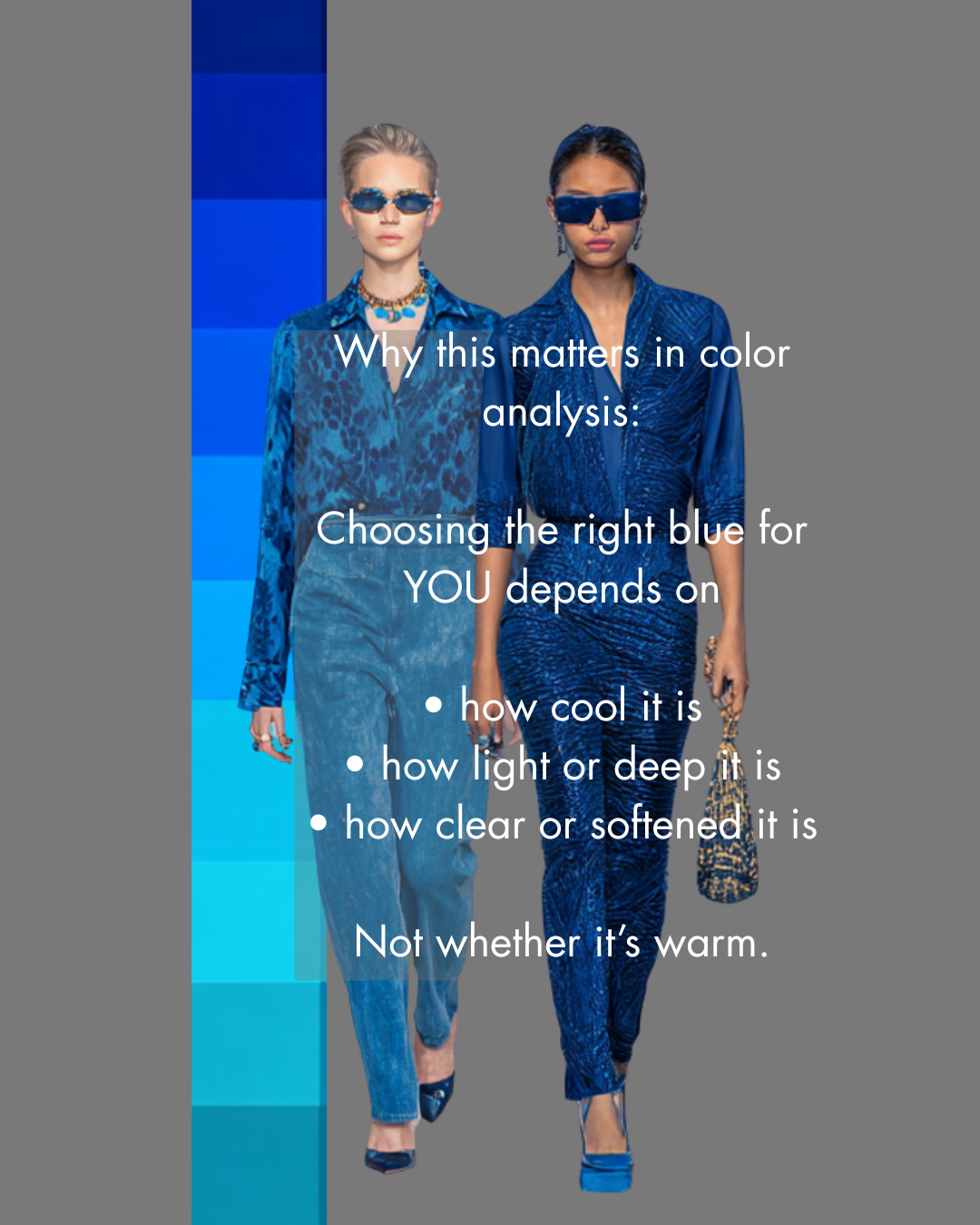
Understanding this helps you filter color with precision—and avoid one of the most common myths in color theory.
The next time you’re unsure if a blue “looks warm,” don’t get tripped up by the terminology—there’s no such thing as a truly warm blue.
But if you have a warm undertone, what you can look for are neutral-leaning blues—those with just enough yellow to soften the edge without tipping into green. They’re still cool, but more forgiving and harmonious on warmer complexions.
Instead of asking “Is this blue warm?” ask:
Is this blue neutral-leaning? Muted or bright? Deep or light?
Because the right blue for you won’t be warm—it’ll be the one that aligns with the clarity, depth, and relative temperature of your seasonal palette and natural features.