

Why red is considered a neutral in seasonal color analysis (and why some other systems classify it as warm)
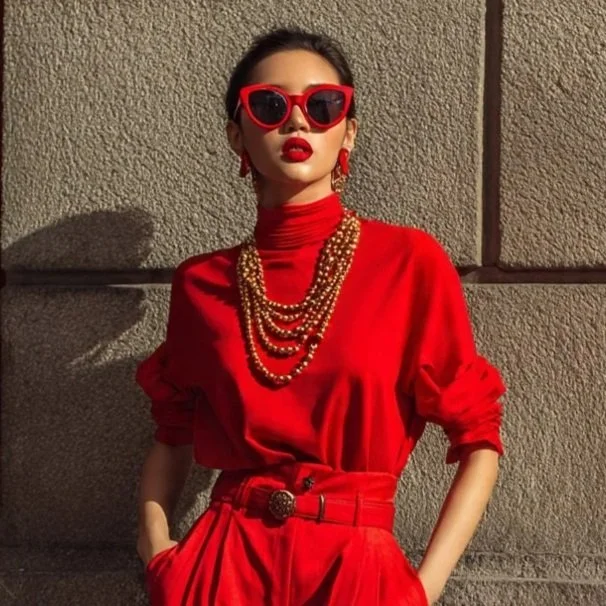
Red often gets casually lumped into the “warm” category—but if you’re diving into the science of color theory or seasonal analysis, you’ll quickly learn: red plays by its own rules.
1. Red Is the Rebel of the Color Wheel
Most hues lean naturally toward a temperature:
Yellow skews warm.
Blue is unmistakably cool.
Green and purple vary depending on their mix of blue or yellow.
But red is unique. Pure red—true, primary red—has no yellow and no blue. That makes it inherently balanced between warm and cool, which means it doesn’t naturally skew either way. It’s neutral in temperature, which sets it apart from nearly every other hue on the color wheel.
2. “Neutral” in Seasonal Color Analysis Means Balanced Undertone
In seasonal analysis, when we refer to red as “neutral,” we’re not talking about how bright or muted it is. We’re talking about temperature balance.
Here’s how that works:
Add yellow → you get a warm tomato red.
Add blue → you shift into a cool berry red.
Keep it pure → you have true red, balanced and neutral.
This is why every season has its own version of red. It’s not about whether red is “allowed” in your palette—it’s about finding your red, the one that works with your undertones, value, and chroma.
3. Some Color Systems Use Psychological Temperature, Not Undertone
Outside of undertone-based color analysis, many systems—especially in fashion or home decor—label red as warm by default. Why?
It’s symbolically linked to fire, heat, and passion. These qualities are culturally and psychologically coded as “warm,” so red is grouped accordingly—alongside oranges and yellows.
The temperature label is emotional, not anatomical.
These frameworks focus more on mood rather than personalized skin tone compatibility.
That’s not incorrect—it’s just a different way of categorizing color. Psychological Temperature is valid in many spaces. But if you’re building a wardrobe that actually complements your skin tone, you’ll want to rely on undertone, not metaphor.
4. Why This Distinction Matters in My Work
When I teach clients about color, I focus on the science behind how color interacts with their natural features—not just how a color is culturally perceived.
Here’s what that looks like:
I teach undertone, not symbolism.
I guide clients to see how colors interact with their skin, not how colors are emotionally coded.
I show how red shifts across all palettes once a temperature modifier is added.
This matters because it empowers clients to:
Understand that every season can wear red.
Choose the right red based on undertone, chroma, and depth—not fear of “breaking a rule.”
See that warm vs. cool is a measurement, not a metaphor.